
HEALTH & AESTHETICS
How to Prepare a Skin-Change Timeline for a Dermatologist in Johor Bahru
Turn dates, photos and product names into a short, private appointment note. Describe what changed without guessing a diagnosis or sharing your health record publicly.
Little things.
Local knowledge.
plazaclass.

Give the dermatologist a short sequence of events: where you first noticed the change, roughly when it started, what happened next, what you used and the question that brought you in. If you have a clear photograph of an earlier stage, put its date beside that event. Your goal is not a complete diary of every day or a diagnosis made from the internet. It is a record you can explain in a minute, leaving the consultation for the clinician to examine you and ask questions.
Do not wait to finish the record if you need urgent care. Difficulty breathing or swallowing with a rash calls for emergency medical attention. A rash that is rapidly spreading, painful or accompanied by fever also warrants prompt medical assessment. The American Academy of Dermatology explains rash warning signs. A photo taken on a phone should never delay seeking help.
The one-page version
| Field | Useful example wording | Avoid assuming |
|---|---|---|
| When first noticed | Around the school holidays; exact day unknown | It began on the date of my first picture |
| Where | On the back of my left hand, later also on a finger | It is the same as a friend’s hand problem |
| What changed | Looked raised on Tuesday; less noticeable by Friday | It was definitely cured on Friday |
| What I used | Product name from the label, dates as far as I remember | The newest purchase must have caused it |
| Main question | What should I watch for if it comes back? | I need a particular treatment advertised online |
Keep your first version short enough to read without scrolling through weeks of chat messages. If several separate concerns are involved, name them A and B. The patch on a hand and the change in a nail might not have started together. Give each its own first date, location and question so that one story does not accidentally become an explanation for the other.
Start with an event you can place in time
Many people remember “it was just before our family trip” more reliably than a day of the month. Use that. An anchor like the week you moved house or the evening of a school event is helpful if you are clear it is approximate. “First noticed” means the first time you saw it. Unless you know, it is not a claim about the exact biological start of the problem.
Separate your own observations from another person’s recollection. For example: “I first noticed itching on Monday. My sister thinks the mark appeared in a photo the weekend before.” That gives the doctor two pieces of information with their different levels of certainty intact. Do not spend the evening searching every picture ever taken just to settle a detail the clinician may not need. If you find a useful original photo, keep its actual date.
Describe the change in ordinary language
Choose descriptions you can point to: the area spread towards the wrist, there were two separate patches, the surface felt rougher, or it began to disturb sleep. Describe what was difficult in everyday life, such as holding a pen or wearing a work glove, if it actually happened. A clinician can ask more about the appearance. You do not have to choose from a dictionary of skin diseases to be taken seriously.
Write “I noticed it after my shift” instead of “my workplace caused this” unless a clinician has established that link. If you did something differently that week, record the timing without turning it into a conclusion. A new detergent, a different glove or an unfamiliar cream may be worth mentioning. The fact that two things happened in the same week does not tell you whether one caused the other.

Pick a few useful photographs, not a camera roll
The Academy’s guide to photographing a skin concern suggests good light, clear focus and more than one perspective. An overview can show location; another image can show the affected area next to surrounding skin; a closer picture can show detail. Use unfiltered originals. If an earlier photo is blurry but tells you which day you noticed the change, note the date without presenting the blur as proof of a particular diagnosis.
An excellent picture has little value if nobody knows what it shows. Label a private album with short captions such as “left wrist, morning before work” and the real date. Do not draw directly over the feature, smooth the skin or change the colour to make it more visible. Save an unaltered copy. If you cannot photograph the area comfortably or safely, tell the doctor instead. A patient can ask for an in-person assessment without providing a picture.
A product list that the doctor can use
Write down product names as displayed on the container, not just “the white cream”. If you cannot identify the item, say where you got it and whether there is a label you can bring. Separate products from prescribed medicines; include medicines and supplements in the information you discuss with the doctor. The Academy’s appointment preparation guide explains why the dermatologist may ask about what you use or take.
Next to each item, add approximate start and stop dates, which area it was used on and what you noticed. “It stung the first evening; I do not remember whether the patch was already getting bigger” is more informative than “it failed”. Do not deliberately restart something to recreate the problem, test a new treatment to make your diary more interesting, or stop a prescribed medicine without asking the clinician who manages it.
Worked example: a change that is quieter on appointment day
Imagine Farah notices a patch on the back of her hand before a family dinner. On Monday it bothers her while washing up; by the time her JB appointment comes round the patch is harder to see. She writes four lines: when she first noticed it, when it affected her day, what she used, and when it became less visible. She selects two dated pictures rather than a borrowed photograph of somebody with a similar-looking mark.
Her opening sentence is: “This is quieter today, but it has returned twice; I would like to know what to do if it happens again.” That gives the doctor a starting point without claiming the picture establishes a diagnosis or asking for a named prescription. If the doctor wants more detail about exposures or previous episodes, she can use the rest of her notes. She has not tried to make the area look worse for the visit.
What to do with private or sensitive images
Ask the clinic whether photographs are needed before the appointment and which secure channel it uses. The Academy’s photography advice explicitly directs patients to ask the dermatologist’s office how to transfer medical photographs. A public review, social-media comment or neighbourhood chat is not a substitute for that channel. You can say you prefer to show your phone in person, particularly if the photograph includes an intimate area.
Check backgrounds before sharing. A name on a school uniform, an address label beside a sink or a second person’s face may reveal more than the picture of the skin itself. Ask before using a relative’s device or copying something from a family album. If a parent is preparing records for a child, keep the audience small and respect the child’s comfort and privacy. The driver or colleague swapping shifts does not need a copy of the timeline.
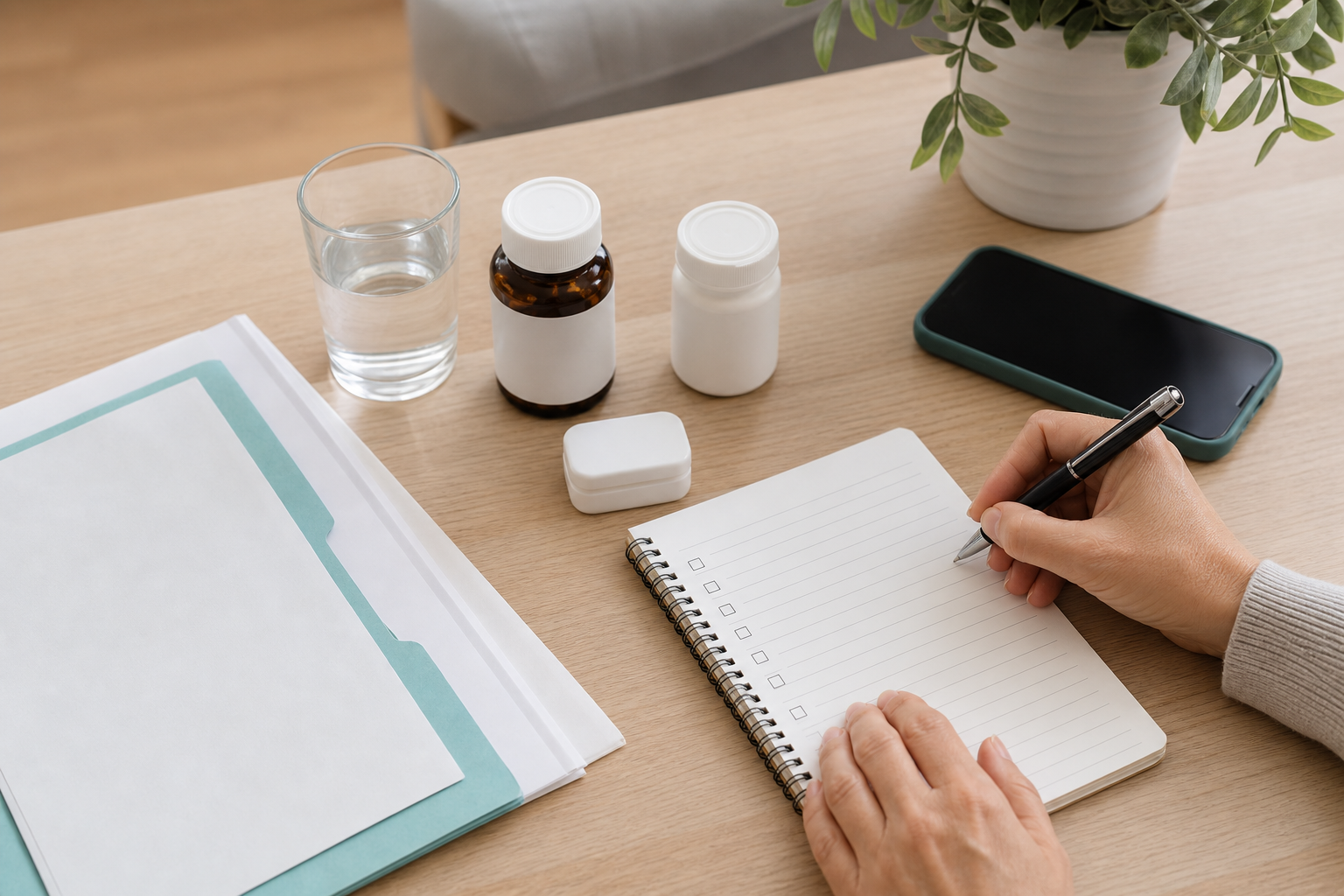
Turn a long history into a short opening
Try reading the note aloud once. The first sentence tells the doctor why you are there today. The next two explain the most relevant changes. The last one states what you hope to understand. If you reach the end without mentioning which area bothers you now, put that detail first. A long list of internet names for the problem belongs outside this short opening; the doctor can examine the area and explain what possibilities need considering.
For a multi-episode history, label the entries “first”, “most troublesome” and “most recent”. They may be three different dates. If the most recent episode was less severe, don’t erase the earlier one just because the current photograph looks mild. Equally, don’t show the most dramatic picture as if it were taken this morning. Dates and simple labels keep the conversation honest.
Bringing the timeline to the right JB appointment
If you are still deciding between a Tebrau and Iskandar Puteri appointment, our Johor Bahru dermatology comparison identifies the two hospital branches. Keep the medical note with the patient and the address with the person arranging the ride. PlazaClass is an independent guide, not a destination to send private photos or seek an individual diagnosis.
Before you leave the appointment, add a separate section marked “advice from this visit”. Use the clinician’s wording for the next step and who to contact if things change. Do not overwrite the original observations with a new explanation; keeping the two apart will help if a different clinician sees you later. Ask whether further photographs would actually be useful and, if so, what the clinician wants to compare.
Frequently asked questions
What if I have no photographs or exact dates?
Attend with what you do know. Rough timing, location, symptoms you noticed and changes to daily activities can still help the discussion. Do not delay appropriate care to make a more complete record.
Should I include a product if I only used it once?
If you think it could be relevant, note the name and that it was used once. This is an observation for the clinician, not a conclusion that it caused the change.
Can my partner speak for me about what appeared on my back?
They can describe what they personally noticed if you want that help and the clinic permits it. Tell the clinician separately how the area felt to you and which details you are unsure about.