

A first ENT appointment may involve more than looking into the ears and throat, but it should not feel mysterious. The clinician’s aim is to connect the symptom history with a focused examination and decide whether testing is necessary. The exact process differs for hearing loss, nasal blockage, dizziness, snoring, voice change or swallowing difficulty. Some patients receive a clear diagnosis at the first visit; others need audiology, a scope, imaging or follow-up before the cause becomes certain. Preparing records and knowing what to expect can make the visit more efficient and reduce anxiety about unfamiliar equipment. This guide follows the usual stages of a consultation and highlights questions that keep you involved in the plan.
What this guide covers
- Expect detailed questions about duration, triggers and functional impact.
- The examination is tailored to the symptom.
- A scope or hearing test is used only when clinically appropriate.
- Treatment can be medical, procedural, surgical or observational.
- Confirm results, follow-up and warning signs before leaving.
Registration and preparation
Arrive with enough time for registration and bring the referral letter, identification required by the clinic, medication list and relevant reports. For a hearing concern, include previous audiograms; for sinus or head and neck problems, bring imaging reports and files if requested. Do not fast or stop medicines unless specific instructions have been provided.
Write down the two or three outcomes you want from the visit—for example, understanding persistent blockage, checking a change in hearing or discussing recurrent tonsillitis. This helps the clinician address the main concern even when several symptoms are present. Parents can bring notes about infections, sleep, speech and school observations.
The symptom history
The doctor will ask when the problem began, whether it is constant or intermittent and how it affects daily life. Ear questions may cover pain, discharge, hearing, tinnitus and dizziness. Nasal questions may address blockage, smell, allergy patterns and bleeding. Throat questions can include swallowing, voice, reflux-related symptoms and snoring.
Some questions explore risks or alternative explanations, such as noise exposure, smoking, medicines, previous surgery or neurological symptoms. They are not an accusation and do not mean a diagnosis has already been made. Be honest about treatments tried and how consistently they were used; this prevents repeating ineffective care and helps the clinician interpret response.
The focused ENT examination
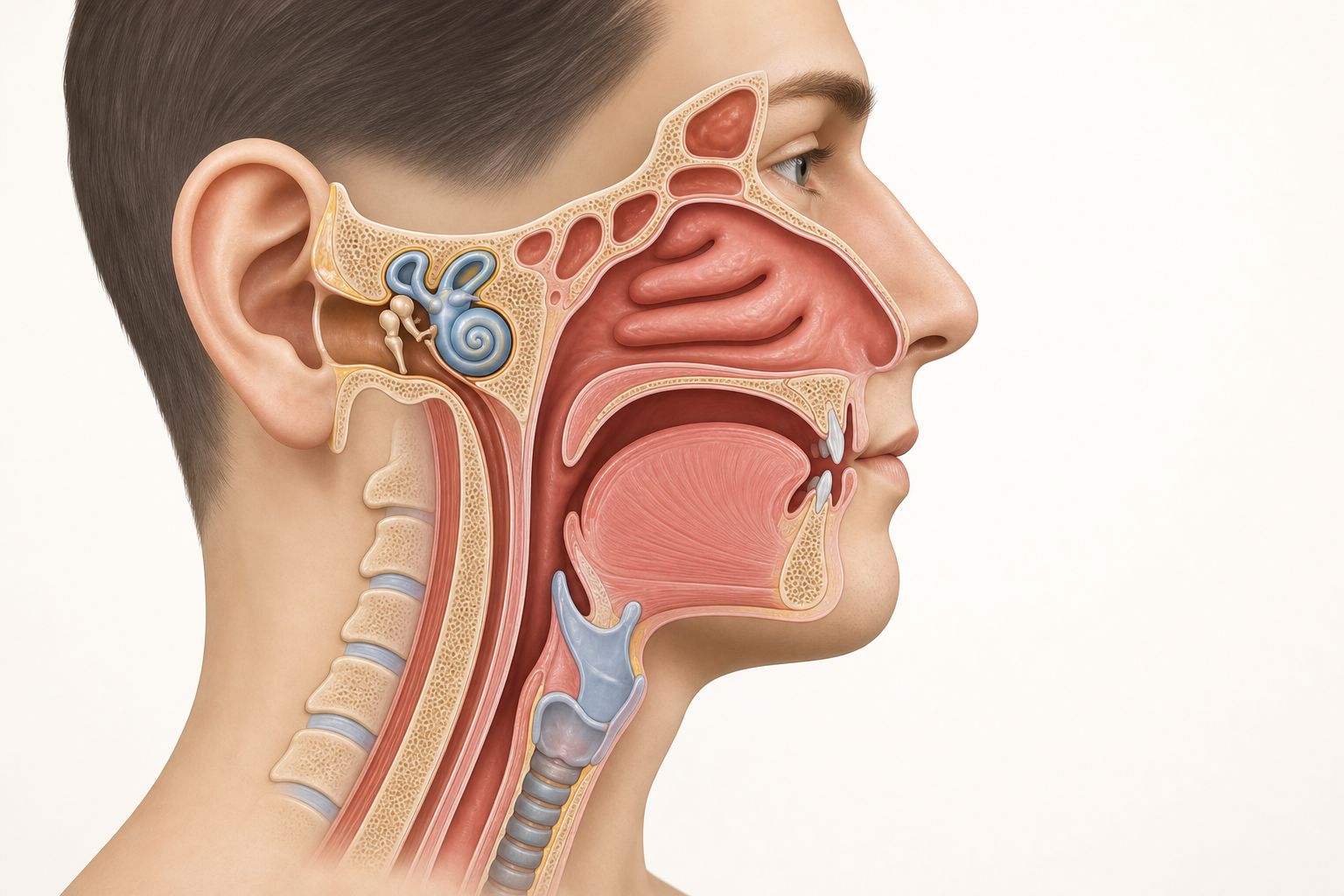
The doctor may examine the outer ear and ear canal with an otoscope, inspect the nose and mouth, look at the throat and feel the neck. The exact sequence depends on the symptom. The clinician should explain any examination that requires closer access and provide appropriate privacy and infection-control measures.
A normal basic examination can still be useful. It may rule out visible blockage or infection and direct attention toward hearing, balance or functional testing. An abnormal finding may suggest a diagnosis but still require confirmation. Ask the doctor to explain what was seen and how strongly it supports the working diagnosis.
When a flexible scope may be discussed
A thin flexible scope can allow the clinician to view parts of the nasal passages, throat or voice box that are not visible with a routine mouth examination. It may be considered for persistent nasal, throat, voice or swallowing symptoms. Not every patient needs one, and the doctor should explain the clinical question before proceeding.
Ask what the examination may feel like, whether numbing spray is used and what risks or limitations apply. You should be able to ask questions and provide consent. The finding may lead to reassurance, medication, further testing, a tissue assessment or another specialist pathway, depending on what is observed.
Hearing, balance and other diagnostic tests
Audiology can measure hearing thresholds and help distinguish different patterns of hearing loss. Tympanometry assesses aspects of middle-ear function, while specialised balance tests may be used for selected dizziness presentations. Imaging is reserved for situations where it is likely to answer a relevant question. A test should not be ordered simply because technology is available.
Ask when results will be ready and who will explain them. Some tests are completed on the same day; others require another appointment. If a result is normal but symptoms continue, ask what that rules out, what remains possible and what the next step will be.

Agreeing on treatment and follow-up
Treatment may include reassurance and monitoring, lifestyle changes, medication, hearing support, a clinic procedure or surgery. The doctor should explain the purpose, expected timeframe and possible side effects of each option. For surgery, ask about alternatives, recovery, important risks and whether another assessment is required first.
Patients considering CMH Specialist Hospital’s ENT service can review its stated conditions and specialist interests before the visit. During the consultation, confirm that the recommended pathway fits the specific diagnosis and age group rather than relying only on the service description.
Leave with a safety net
Before leaving, confirm the working diagnosis, treatment duration and follow-up plan. Ask what improvement should look like, when to contact the clinic if improvement does not occur and which symptoms require prompt care. If a test has been ordered, know who books it and how the result will reach you.
Repeat the plan in your own words. This simple step catches misunderstandings about sprays, medicines, follow-up or procedure preparation. Request written instructions when available, especially when several treatments or appointments are involved.
What a good follow-up plan should contain
Before leaving the clinic, confirm whether the working diagnosis is definite or provisional. Many ENT problems require the clinician to combine history, examination and the response to initial treatment. If a hearing test, scan, laboratory test or endoscopic examination is arranged, ask what question it is intended to answer and how you will receive the result. Clarify whether a new appointment is automatic or whether you must contact the clinic. These administrative details prevent an otherwise sound clinical plan from becoming unclear.
If medicine is prescribed, check the dose, duration, technique and expected time to benefit. This is especially important for treatments such as nasal sprays, where positioning and regular use can affect results. Ask about common side effects and what should make you stop the medicine or seek advice. If observation is recommended, request a clear review point and the specific changes that should prompt an earlier appointment. ‘Come back if worse’ is more useful when worse has been defined.
Patients who may need a procedure should understand the steps leading to it. Ask whether the procedure is diagnostic, therapeutic or both; whether local or general anaesthesia may be used; and what recovery restrictions are common. The first consultation may not answer every procedural question, particularly before tests are complete, but it should establish what must happen before a final recommendation can be made.
Keep a simple record after the visit. Save the clinic letter, test requests, medication instructions and the name of the service to contact. Note any change in symptoms and whether treatment is helping. At follow-up, this record helps the clinician judge progress based on more than a single day’s symptoms. A good first ENT consultation is therefore not only an examination—it is the start of an organised process that links symptoms, findings, treatment and review.
If you use hearing aids, inhalers, dental appliances or sleep-related devices, bring them or note the model and current settings. Small practical details can help the specialist understand how symptoms affect everyday communication, breathing, eating and rest.
Frequently asked questions
Will the doctor examine both ears if only one has symptoms?
Often both sides are compared, but the exact examination is determined by the clinician. Comparison can help identify whether a finding is new, one-sided or part of a broader pattern.
Does a flexible scope hurt?
Experiences vary. The clinician should explain expected discomfort, preparation and whether a numbing spray is appropriate. Tell the team about concerns before the examination.
Can I drive after a routine ENT visit?
A standard consultation usually does not affect driving, but certain procedures, medicines or severe dizziness may. Ask the clinic for instructions specific to what was performed.
Why might I need another specialist?
Symptoms can overlap with neurological, respiratory, dental, digestive or other conditions. Referral does not mean the ENT assessment failed; it may be the safest way to address findings outside the specialty.
Can treatment start before all tests are complete?
Sometimes symptom treatment can begin while investigations continue, but this depends on the likely diagnosis and risk. The doctor should explain what is provisional and what awaits confirmation.
Planning your next step
- Prepare records and two or three priority questions so the first ENT visit produces a clear assessment, testing plan and safety net.
A first ENT consultation is a process of narrowing possibilities. Detailed history, targeted examination and selective testing should lead to a plan that you understand. The most valuable outcome is clarity about what is known, what still needs investigation and how to respond if symptoms change.
This article is intended for general education and does not replace an individual diagnosis or treatment plan. Seek urgent medical attention for severe, sudden or rapidly worsening symptoms.