
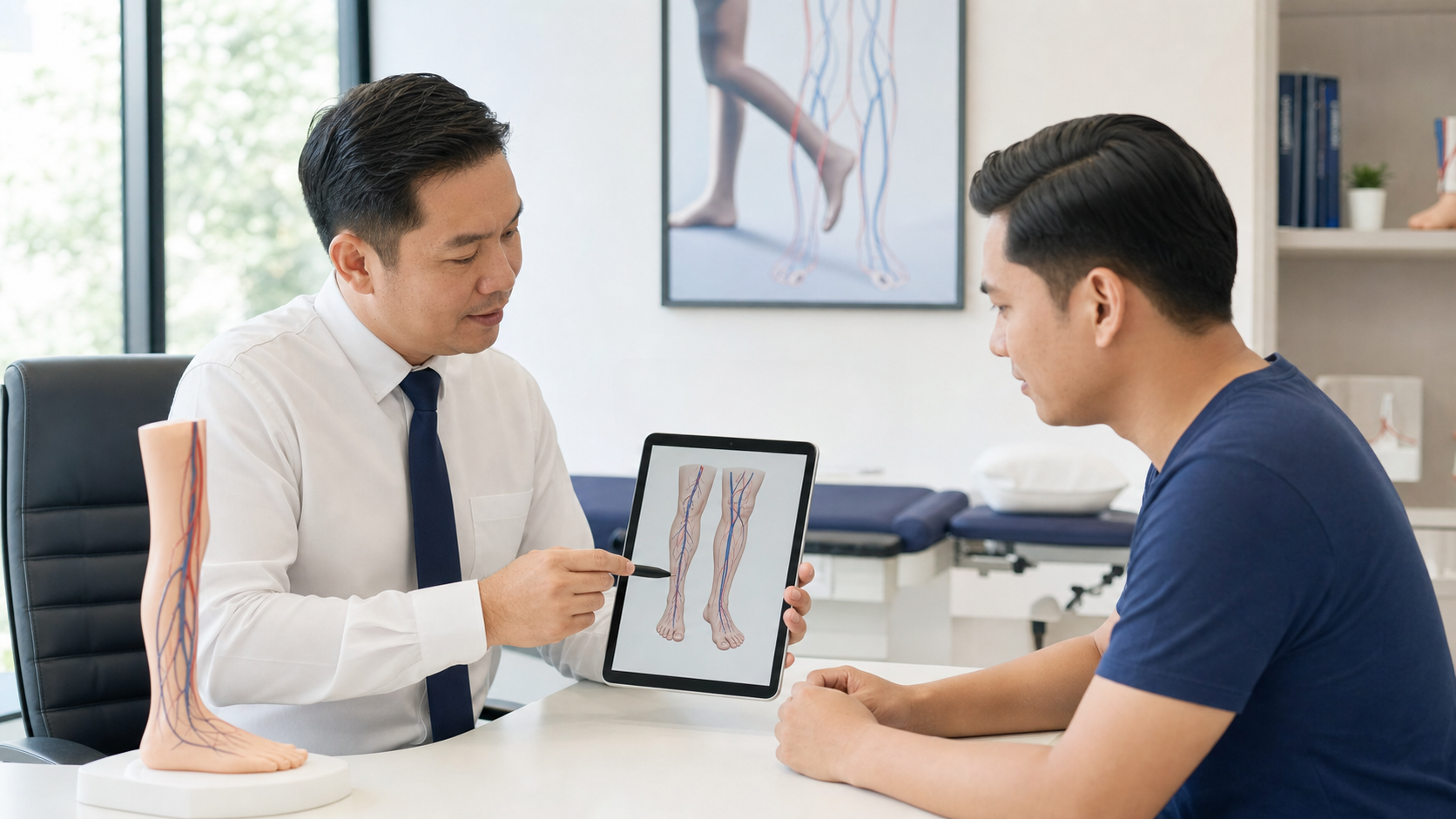
Leg pain and swelling are common, but they are not a diagnosis. A problem can originate in muscles, joints, nerves, veins, arteries, lymphatic vessels or another part of the body. The pattern is therefore more informative than the symptom alone. Pain that appears during walking and eases with rest raises different questions from pain caused by movement of a joint. Gradual swelling in both legs is assessed differently from sudden swelling in one leg. A vascular assessment focuses on circulation and helps determine whether arteries, veins or lymphatic function may be contributing. This guide explains patterns that should prompt medical advice, what a vascular consultation may involve and which symptoms require urgent care rather than a routine appointment.
What this guide covers
- Describe when pain occurs, how far you can walk and what relieves it.
- Record whether swelling affects one leg or both and how quickly it developed.
- Slow-healing wounds, skin changes and coldness deserve assessment.
- A vascular examination may include pulses and non-invasive ultrasound.
- Sudden severe pain, a cold limb, chest pain or breathing difficulty are urgent.
Recognise pain that may relate to arterial circulation
One vascular pattern is discomfort or cramping in the calf, thigh or buttock that appears after a repeatable amount of walking and improves with rest. Clinicians may call this intermittent claudication. However, similar pain can come from the spine, joints or muscles, so the pattern must be interpreted with examination and risk factors rather than self-diagnosed.
Record the distance or time you can walk before symptoms begin, whether hills make them worse and how quickly they settle. Pain at rest, particularly in the foot at night, or a sudden major change may require more urgent assessment. Report coldness, colour change, numbness or weakness, as these details influence urgency.
Understand swelling and venous symptoms
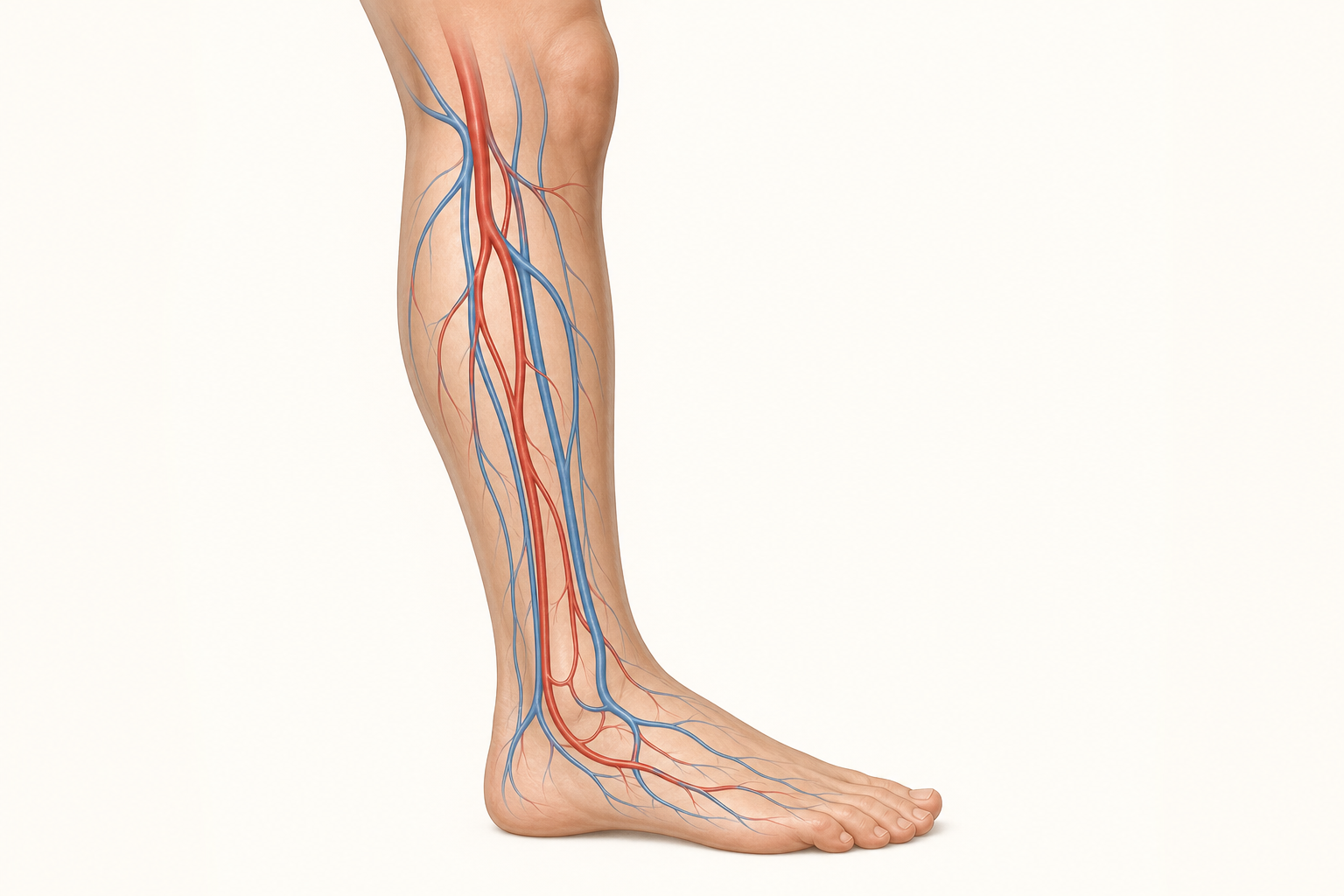
Leg swelling may be associated with venous disease, but it can also result from medication, injury, reduced mobility or conditions affecting the heart, kidneys, liver or lymphatic system. Note whether swelling is one-sided or bilateral, sudden or gradual, and whether it changes through the day. Aching, heaviness, itching and skin changes around the ankle can accompany venous problems.
Sudden swelling in one leg, especially with pain, warmth or redness, needs prompt medical assessment because a blood clot is one possible cause. Chest pain, coughing blood or shortness of breath together with leg symptoms is an emergency. Do not massage a suddenly swollen painful leg or wait for a routine vascular appointment.
Pay attention to wounds and skin changes
A wound on the foot or lower leg that does not heal as expected may require evaluation of circulation, pressure, infection, diabetes control and other factors. Venous disease can produce skin discolouration, inflammation or ulcers around the ankle, while reduced arterial flow can contribute to wounds on the toes or pressure areas. Appearance alone cannot establish the cause.
Seek advice for persistent wounds, blackened tissue, spreading redness, increasing pain or signs of infection. People with diabetes or reduced sensation should check their feet regularly and follow professional foot-care guidance. Avoid applying unverified treatments that can irritate tissue or hide deterioration.
Know the factors that shape vascular risk
Smoking, diabetes, high blood pressure, high cholesterol, kidney disease, age and a personal or family history of vascular disease can influence arterial risk. Previous blood clots, pregnancy, immobility, surgery and some medicines may influence venous risk. Having a risk factor does not prove that symptoms are vascular, and lacking one does not rule a problem out.
Bring current medicine and supplement lists and recent blood pressure, diabetes or cholesterol records when available. Tell the clinician about previous clots, vascular procedures and difficulty walking. Risk-factor management may become part of treatment even when no operation or procedure is recommended.
What a vascular assessment may include
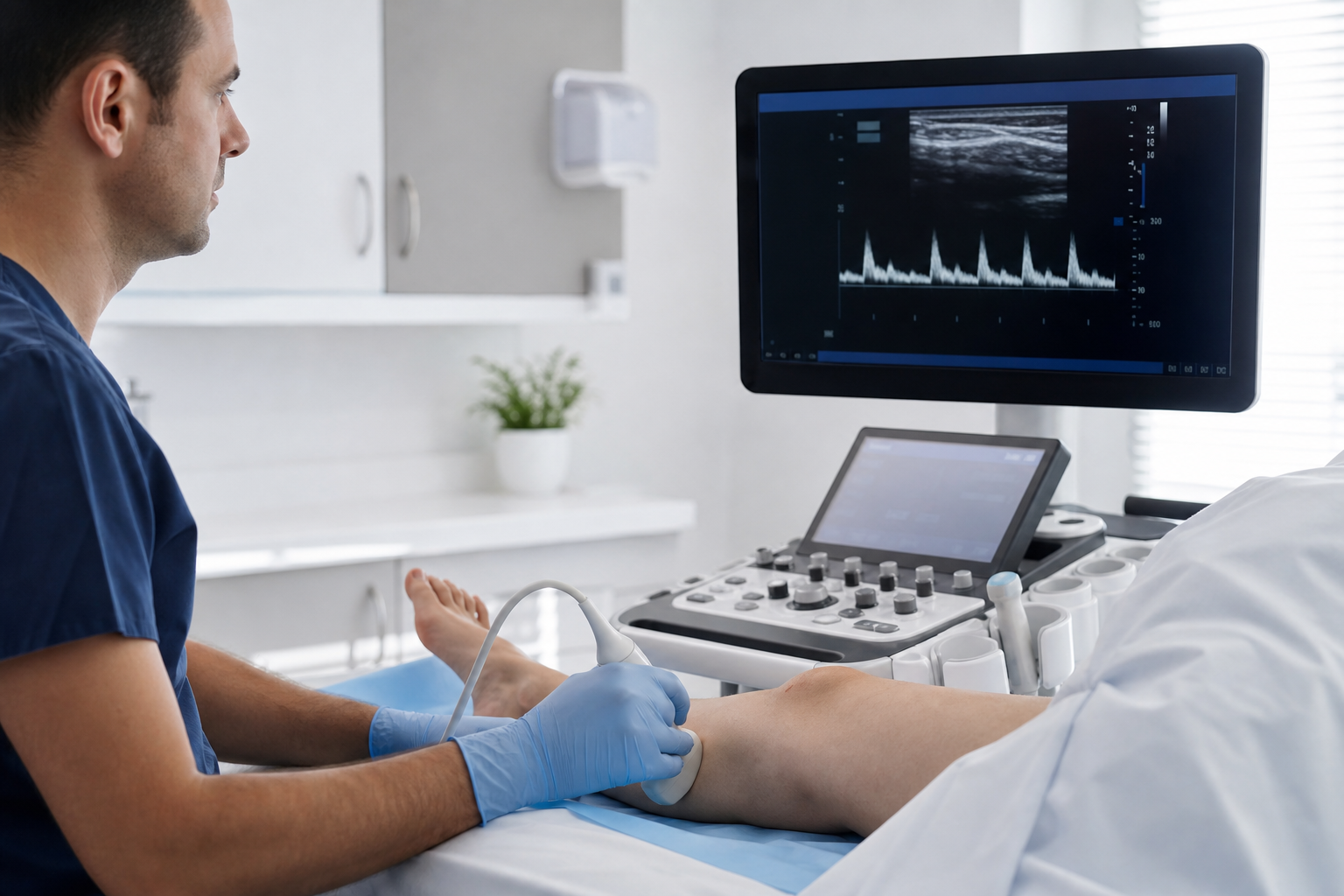
The clinician may examine the skin, temperature, swelling and wounds, and compare pulses in the legs and feet. Blood-pressure measurements at the ankle, non-invasive Doppler assessment or duplex ultrasound may be used in selected cases. Imaging beyond ultrasound is ordered when it is likely to clarify anatomy or guide treatment.
Ask what each test is intended to answer. A result should be interpreted with symptoms and examination rather than treated as an isolated number. People looking for a vascular surgeon Seremban residents can consult may review the hospital service, then ask whether their symptom pattern needs a specialist visit and what records to bring.
Treatment does not always mean vascular surgery
Management depends on the diagnosis. It can include walking or exercise programmes, smoking cessation, management of blood pressure, cholesterol or diabetes, medication, wound care, compression when clinically appropriate, minimally invasive treatment or open surgery. Compression is not suitable for every circulation problem and should be used according to professional advice.
If a procedure is proposed, ask what symptom or risk it addresses, what alternatives exist and how success will be measured. Discuss complications, recovery and the possibility that lifestyle and medical management will still be needed afterwards. A procedure treats a defined problem; it does not remove every future vascular risk.
Prepare a precise symptom diary
For walking pain, record the activity, distance, location of pain and recovery time. For swelling, note which leg, time of day, effect of elevation and associated redness or warmth. Photograph a wound periodically for your own clinical record if advised, using consistent lighting and a size reference, but protect personal medical images and share them only through approved channels.
Bring previous ultrasound or scan reports, operation notes, medication lists and information about diabetes or clotting history. Ask the clinic whether the actual imaging files are needed. A precise diary helps the specialist compare subjective symptoms with examination and test findings.
Observe the symptom without delaying necessary care
If the symptom is stable and a routine appointment has been advised, a short diary can help. Record when pain or swelling appears, whether one or both legs are affected, how far you can walk before discomfort starts, and how quickly the symptom settles with rest or elevation. Note skin colour or temperature changes, wounds, prominent veins and whether shoes or socks become tighter later in the day. Photographs taken for your own clinical record can show change over time, but avoid including identifying details when sharing them electronically.
Bring a complete medicine list, including blood thinners, hormone treatment and supplements. Also mention smoking history, diabetes, high blood pressure, cholesterol problems, previous clots, operations, pregnancies and close relatives with vascular disease. These factors do not diagnose the cause by themselves, but they influence risk assessment and the choice of investigation. Previous ultrasound or scan reports are valuable when available because comparison may prevent unnecessary repetition.
While waiting, follow existing medical advice rather than beginning compression garments, vigorous massage or new medication without guidance. Compression can help certain venous problems but is not suitable for every circulation issue. A vascular assessment may include pulse examination, comparison of both legs and targeted ultrasound or other tests. Ask what the clinician is looking for and what result would change treatment. The goal is to distinguish arterial, venous and non-vascular causes and then act in proportion to the findings.
Routine tracking should never delay emergency care. Sudden marked swelling in one leg, severe pain, a cold or pale limb, chest pain, breathlessness or rapidly worsening symptoms need urgent assessment. When uncertain, contact an appropriate medical service and describe the onset and severity clearly.
Frequently asked questions
Is every leg cramp a circulation problem?
No. Muscles, joints, nerves, medicines and other conditions can cause cramps. A repeatable pattern with walking is one clue, but diagnosis requires assessment.
Can varicose veins cause swelling?
Venous problems can contribute to aching, heaviness and swelling, but these symptoms have other causes. Assessment is important when swelling is new, one-sided, persistent or accompanied by skin changes.
What is duplex ultrasound?
It is a non-invasive ultrasound test used to assess structures and blood flow. The area examined and meaning of the result depend on whether the clinician is evaluating arteries, veins or another concern.
Should I start compression stockings myself?
Seek professional advice first, especially if arterial circulation is uncertain. The type and strength of compression should match the diagnosis and individual circumstances.
Which symptoms are emergencies?
Sudden severe leg pain, a cold or pale limb, sudden weakness, major one-sided swelling, chest pain or breathing difficulty require urgent medical assessment.
Planning your next step
- Arrange an assessment when leg symptoms persist, follow a repeatable walking pattern, involve wounds or skin changes, or worsen over time.
The most useful vascular history is specific: when symptoms occur, which leg is affected, how quickly they change and what other signs accompany them. Early assessment is particularly important for sudden or severe changes. For routine concerns, a symptom diary and complete medical history can help the clinician choose the right non-invasive tests and treatment pathway.
This article is intended for general education and does not replace an individual diagnosis or treatment plan. Seek urgent medical attention for severe, sudden or rapidly worsening symptoms.