
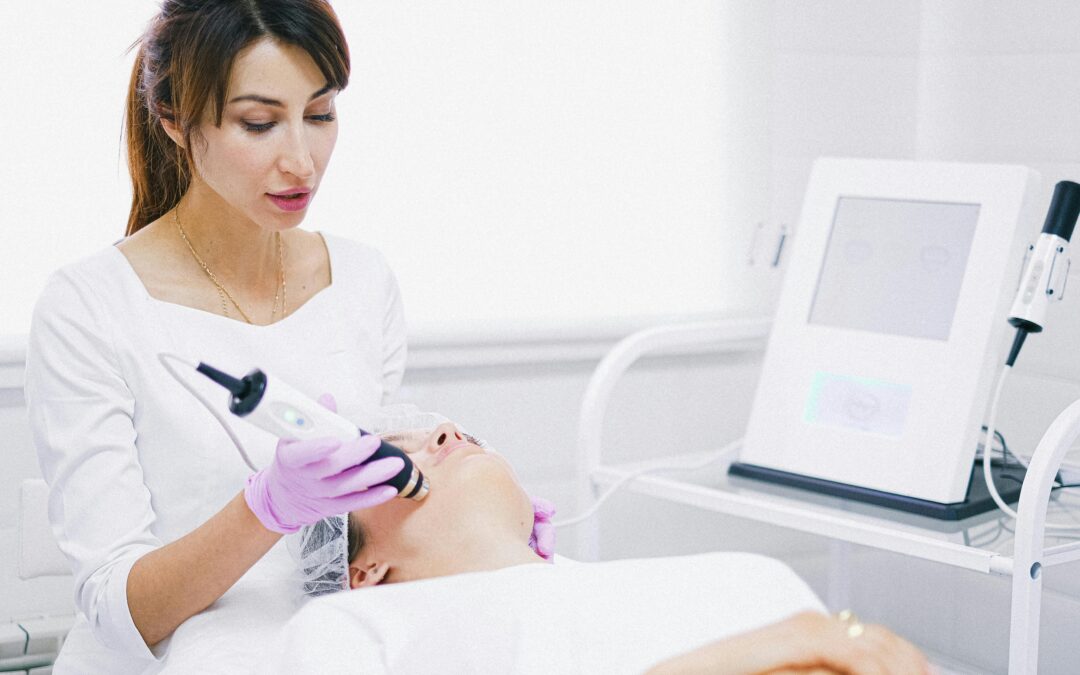
Laser skin resurfacing utilizes laser technology to diminish the visibility of wrinkles and scars, even out skin tone, tighten the skin, and eliminate both benign and malignant lesions.
The laser method emits brief, focused pulsing light beams onto uneven skin. Laser skin resurfacing meticulously removes skin in layers by vaporizing it. Lasers eliminate the outermost skin layer, known as the epidermis, while also heating the deeper layer, referred to as the dermis. This process encourages the formation of fresh collagen fibers, leading to smoother and firmer new skin. This widely used technique is also referred to as lasabrasion, laser peel, or laser vaporization.
Who Is An Appropriate Candidate For Laser Skin Resurfacing?
You might be well-suited for laser skin resurfacing if you possess:
Scarring from acne or chickenpox.
Uneven skin tone.
Scars on the skin or birthmarks.
Age spots or liver spots.
Skin damaged by the sun.
Skin that did not respond well following a facelift.
Fine lines or wrinkles around the eyes, forehead, or mouth.
Enlarged oil glands on your nose.
You may not be well-suited for laser skin resurfacing if you have:
Active acne.
Very dark skin types.
Deep-set wrinkles.
Excess skin or sagging skin.
How Does Laser Skin Resurfacing Function?
Laser resurfacing comes in two varieties. The first type includes carbon dioxide (CO2) and erbium lasers that produce a consistent injury in the treated skin area. The second type is referred to as fractionated CO2 laser treatment, which employs the laser to create many narrow columns of holes deep within the skin layers, leaving the surrounding skin untouched.
CO2 Laser Resurfacing
For many years, CO2 laser resurfacing has been employed to address various benign and malignant skin issues. A newer type of CO2 laser resurfacing utilizes very brief pulsed light energy (ultrapulsed) or continuous light delivered in a scanning method to accurately remove thin skin layers while minimizing heat damage to adjacent tissue. Also read Laser Clinic in Singapore for more information.
CO2 laser resurfacing has effectively treated wrinkles and scars, along with other benign skin growths like warts, birthmarks, rhinophyma (enlarged oil glands on the nose), and various skin ailments.
The recovery period for CO2 laser resurfacing can last up to two weeks.
Erbium Laser Resurfacing
Erbium laser resurfacing targets superficial and moderately deep lines and wrinkles on the face and usually requires only local anesthesia. This type of laser can also be applied to the hands, neck, or chest. A key advantage of erbium laser resurfacing is its minimal impact on surrounding tissue, resulting in fewer side effects such as swelling, bruising, and redness, which may lead to a quicker recovery.
If you have a darker skin complexion, erbium laser resurfacing might be a suitable option.
The recovery time for erbium laser resurfacing is approximately one week.