
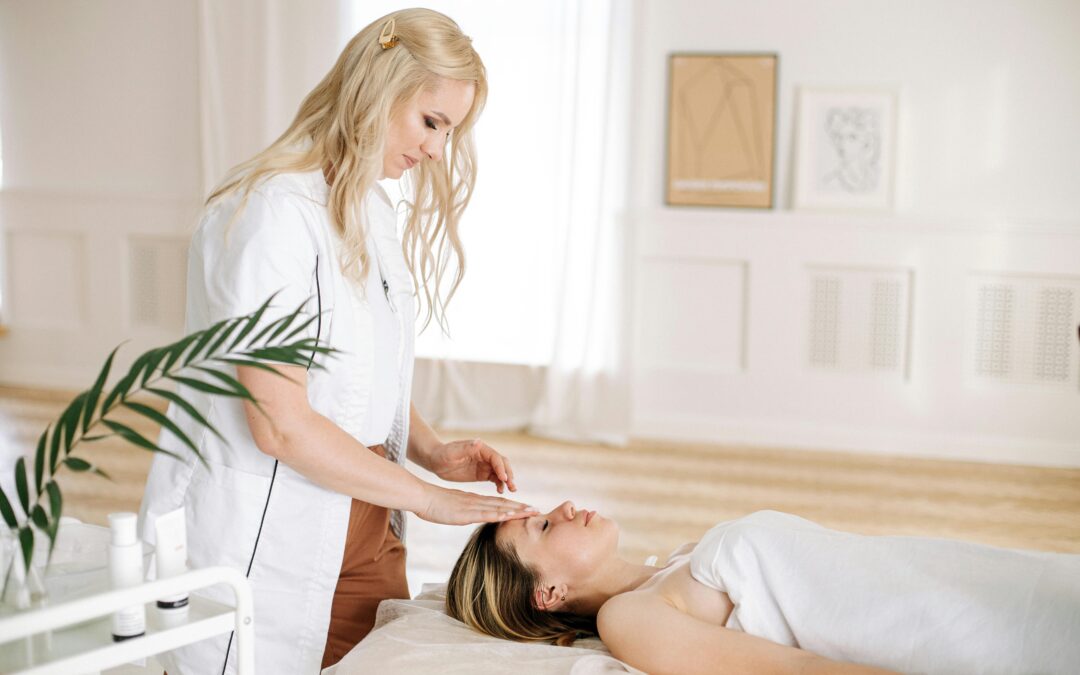
A chemical peel, also called chemexfoliation or dermapeeling, uses a special chemical solution to make your skin look better. During the treatment, the chemical is put on your skin, which makes small injuries to the skin layers. Over time, the old skin peels off, revealing newer skin that looks younger. This new skin tends to be smoother, with fewer lines and wrinkles, a more even color, and a brighter appearance.
What Skin Problems Can A Chemical Peel Help With?
Chemical peels are used to treat some skin issues or to improve how your skin looks by making it smoother and more even.
These peels are most often done on the face, neck, or hands. They can help reduce or improve:
– Fine lines around the eyes or mouth, and wrinkles from sun damage, aging, or family history.
– Certain types of acne.
– Light scarring.
– Sun spots, age spots, liver spots, freckles, and uneven skin color.
– Precancerous, scaly spots called actinic keratosis.
– Rough or scaly skin, dull skin tone.
– Dark patches (melasma) that happen during pregnancy or from taking birth control pills.
You and your dermatologist will decide on the strength of the peel.
This choice depends on your skin’s condition and your treatment goals.
Chemical peel in Singapore are not very effective for sagging skin, deep scars, deep lines, or severe wrinkles.
If you have these problems, other procedures like carbon dioxide laser resurfacing, a facelift, brow lift, eyelid lift, or soft tissue fillers might be better options. A dermatologic surgeon can help you choose the best treatment.
Is A Chemical Peel Safe For All Skin Types?
Superficial peels can be used on all skin types.
However, if you have darker skin, there’s a higher risk of your skin darkening after the treatment. This is called post-inflammatory hyperpigmentation. If you have darker skin, you might want to talk to your dermatologist about other gentler treatments to lower the risk of this problem.
Chemical peels might not be right for you if:
– You have a history of unusual scarring.
– Your scars have extra color.
– You have skin conditions or are on medications that make your skin sensitive.
– You can’t avoid the sun during your skin’s healing time.
What Are The Possible Issues With Chemical Peels?
In some skin types, there is a risk of your skin color changing, either temporarily or permanently.
Taking birth control pills, being pregnant, or having a family history of brown skin discoloration can increase the chance of unusual pigmentation.
There’s also a small risk of scarring in some areas of your face, especially for people who are more likely to scar.
If scarring happens, it can usually be treated well.
If you’ve had cold sores in the past, there’s a slight chance the peel might bring them back.
Your dermatologist can give you medicine to help prevent this. Make sure to follow your doctor’s instructions.
Before your chemical peel, be sure to let your dermatologist know if you have a history of keloids (overgrown scars from skin injuries), unusual scarring, any facial X-rays, or a history of cold sores.
Infections are rare but still possible.