
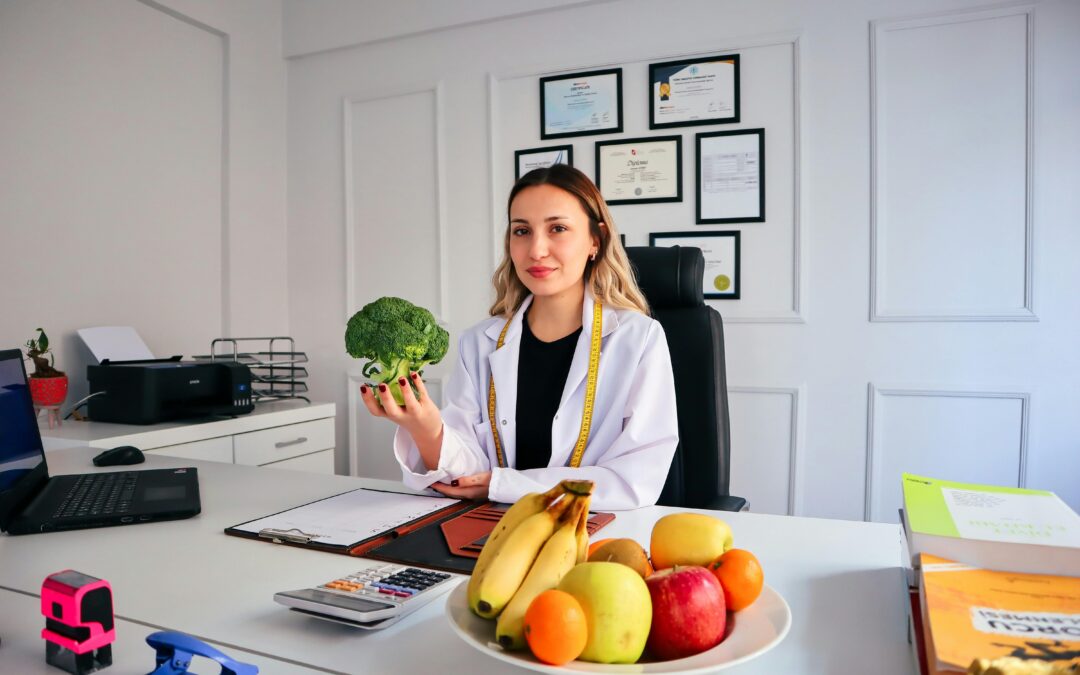
What Is A Registered Dietitian?
A registered dietitian (RD or RDN) is a healthcare professional who knows a lot about nutrition.
They help people improve their health by using food in the right way. They create meal plans based on what people need and teach them about eating well.
To become a registered dietitian, they need specific training.
You can tell if someone is a registered dietitian by the letters RD or RDN after their name.
In some states, they also need a license, which is shown by the letters LD (licensed dietitian) after RD or RDN.

How Can A Dietitian Help Me?
If you are in the hospital, a registered dietitian might be part of your healthcare team.
Whether you are recovering from surgery or a serious illness, you may need special nutrition to help you get better. An RD will check your needs and figure out how to get the nutrients you need, either by eating, through a tube, or through an IV.
You might also visit a dietitian on your own to help you create a nutrition plan.
This could be if you have a health condition that needs you to change your eating habits and you don’t know where to start. Or you might want help with losing weight, gaining weight, or improving your physical performance.
Types Of Dietitians
There are different kinds of dietitians, such as:
Clinical Dietitians
These RDs work in hospitals and other healthcare places. They take care of nutrition for people who are getting treatment in those facilities.
Community Dietitians
These dietitians work to promote health and wellness through food and nutrition. They might work for government agencies, non-profits, or companies that focus on wellness.
Management Dietitians
These dietitians are in charge of meal planning and food programs for organizations like prisons or restaurant chains.
Consultant Dietitians
These RDs work on their own and help clients create eating plans based on their specific needs and goals.
Research Dietitians
Some dietitians work as researchers. They study how food affects different groups of people. Some might focus on specific topics, like food allergies.
What Are The Different Specialties A Registered Dietitian Can Have?
A registered best dietitian seremban can specialize in many areas, like:
Geriatric Nutrition
These dietitians focus on the nutrition needs of older adults. They help prevent and treat conditions like osteoporosis.
Pediatric Nutrition
These dietitians plan nutrition for children to support their growth and development.
Pediatric Critical Care Nutrition
These dietitians work with medical teams to care for children in intensive care.
Obesity And Weight Management
These dietitians help people manage their weight to prevent or treat obesity.
Sports Nutrition
These dietitians help athletes and active professionals, like the police, military, and rescue workers, with their eating habits.
Renal Nutrition
These dietitians create special diets for people with kidney disease or kidney failure.
Oncology Nutrition
These dietitians help people who are being treated for cancer or recovering from it.
Eating Disorders
These dietitians help people with eating disorders recover through nutrition.
Diabetes Nutrition And Care
These dietitians, like Certified Diabetes Care and Education Specialists (CDCES), help people prevent and manage diabetes.
How Do You Become A Registered Dietitian?
To become a registered dietitian, you need to earn a bachelor’s degree and a master’s degree from an approved program.
Then you must complete at least 1,000 hours of supervised experience before taking the national exam to get your RD or RDN credentials. Some states also require a license to practice there.
What Is A Registered Dietetic Technician?
A nutrition and dietetics technician, registered (NDTR) is another credential offered by the Commission on Dietetic Registration (CDR).
NDTRs help registered dietitians. They assess people’s nutrition needs, teach them about food choices, and track their progress.
What Is A Certified Nutrition Specialist?
A certified nutrition specialist (CNS) has a higher degree, such as a master’s or doctorate, in nutrition.
Like dietitians, CNSs get their credentials through classes, training, and passing an exam.
While a CNS has similar knowledge and skills as an RD, the CNS title is not as well known.
Some states allow CNSs to provide medical nutrition therapy, while others do not.