
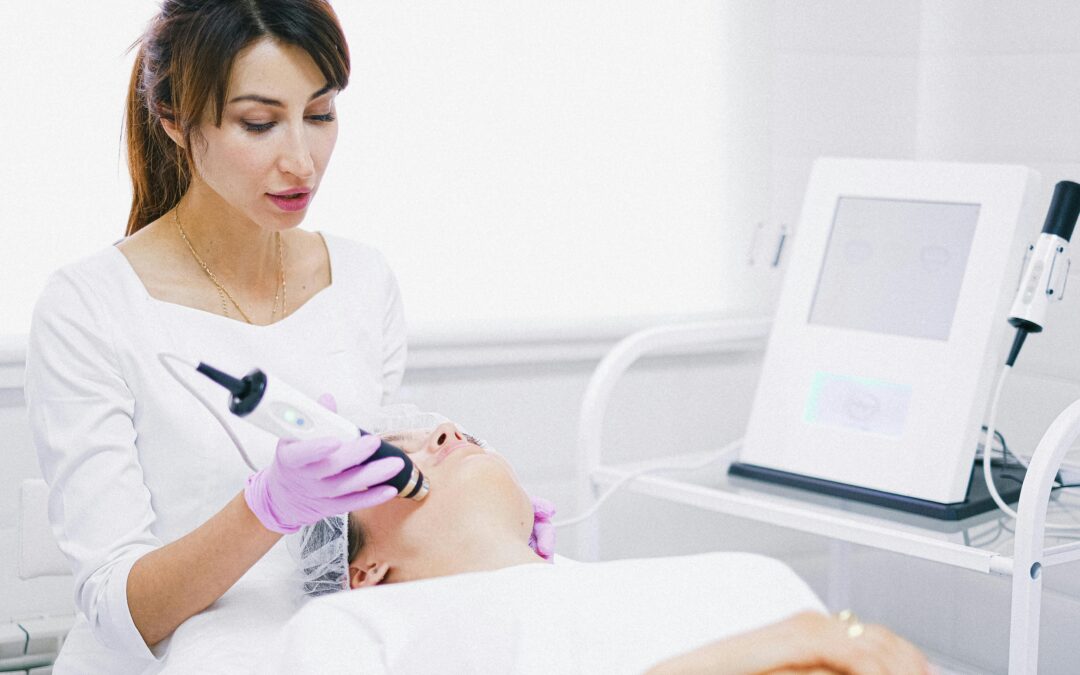
Lasers are more accurate than regular surgical tools. They let doctors make smaller and shallower cuts, which causes less harm to the tissue.
Laser surgeries usually take less time than traditional surgeries.
Often, they can be done without needing to stay overnight in the hospital. If you need general anesthesia, it’s used for a shorter time.
People tend to recover faster with laser treatments.
They may feel less pain, have less swelling, and experience less scarring compared to regular surgeries.
What Happens After Laser Therapy?
Recovery after laser surgery is similar to regular surgery.
You might need to rest for a few days and take over-the-counter pain medicine until the pain and swelling go away.
Recovery time after laser therapy depends on the type of treatment and how much of your body was treated.
You should follow all of your doctor’s instructions carefully.
For instance, if you had laser prostate surgery, you might need to wear a urinary catheter to help with urination after the procedure.
If the therapy was on your skin, you might feel swelling, itching, or a raw feeling near the treated area.
Your doctor might apply an ointment and cover the area with a watertight dressing.
For the first couple of weeks after treatment, make sure to do the following:
Take over-the-counter pain medicine like ibuprofen (Advil) or acetaminophen (Tylenol).
Wash the area with water regularly.
Apply ointments like petroleum jelly.
Use ice packs.
Avoid picking at any scabs.
Once the area has healed and new skin has grown, you can use makeup to cover any redness if you want.
Laser therapy is a medical treatment used for different health issues.
This article will explain everything about laser therapy. It’ll help you understand the types, how it works, the risks and benefits, and who might need it. If you are looking for laser treatment, you can visit Gleneagles Hospital. It offers the best laser treatment available.
What Is Laser Therapy?
Laser therapy is used to treat many short-term and long-term health problems.
It is a non-invasive treatment that uses laser light to help the body heal faster. It uses focused light for different purposes. The full name of laser is light amplification by stimulated emission of radiation. It converts certain wavelengths of light into strong and focused beams. Also read Laser Clinic in Singapore for more detailed information.
Different Types Of Laser Therapy
Low-level laser therapy or cold laser therapy: This type uses low-intensity lasers or light-emitting diodes.
It works by stimulating cell function without heating up the tissue. It is mainly used to relieve pain, reduce inflammation, and help tissues repair. It treats conditions like arthritis, musculoskeletal issues, hair growth, and wound healing.
High-intensity laser therapy: This type uses strong lasers that produce a lot of heat.
It helps in sealing, cutting, or removing tissue. It is used for skin treatments like laser resurfacing, tissue removal, or surgery.
How Does Laser Therapy Work?
Different types of laser therapy are used for various health problems.
Here is how they work:
Photobiomodulation (PBM)- Low-Level Laser Therapy
Low-level laser therapy helps cells produce more energy, which improves their function.
This increases blood flow, promotes quicker tissue repair and cell growth, reduces inflammation, and lowers oxidative stress.
Selective Photothermolysis- High-Level Laser Therapy
High-level laser therapy uses specific laser wavelengths that target certain pigments or tissues.
It is used for hair removal, tattoo removal, and laser surgery. In hair removal, the melanin in the hair absorbs laser energy and damages the hair follicles. In tattoo removal, different wavelengths help break down ink particles. In laser surgery, tissue water absorbs the laser energy, making it possible to cut exactly without causing too much bleeding.