
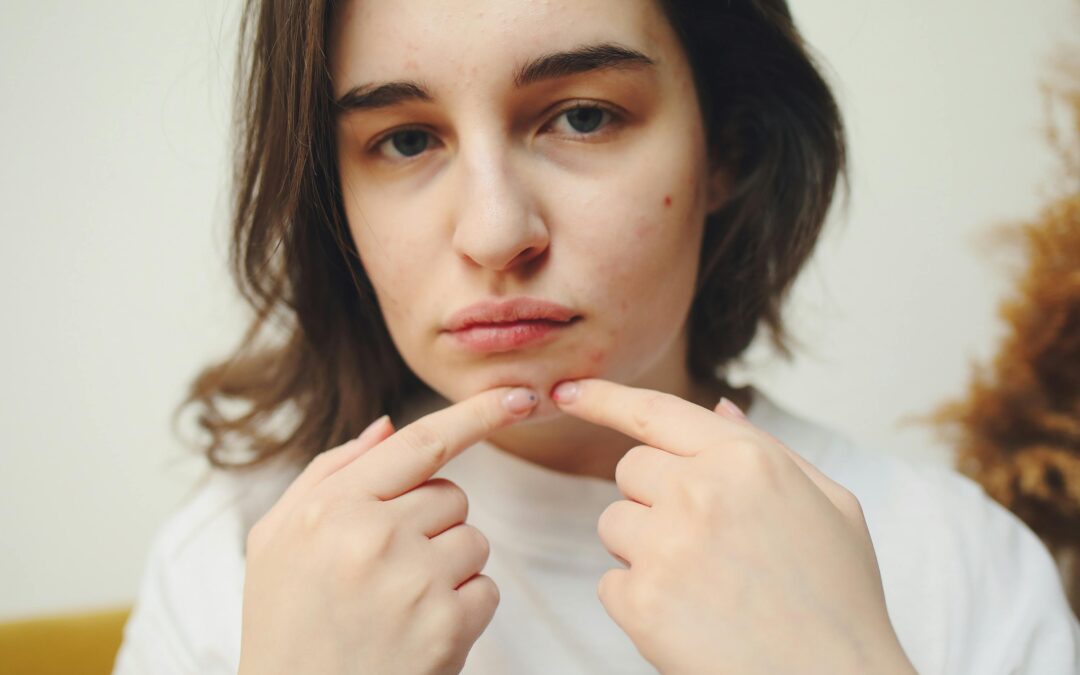
How Is Acne Diagnosed?
A healthcare provider can diagnose acne by examining your skin.
During the exam, they will look closely at your skin to understand your symptoms. They may also ask about factors that could increase your risk of acne, such as:
Are you feeling stressed?
Do you have a family history of acne?
Do you notice breakouts around your menstrual cycle?
What Medications Are You Currently Taking?
Your healthcare provider doesn’t usually need to run tests for acne, but they might use tests to check for other conditions if you have sudden and severe acne, especially if you’re an adult.
Who Treats Acne?
A general healthcare provider or a dermatologist can diagnose and treat acne.
If your acne is hard to treat, a dermatologist can help.
How Severe Can Acne Get?
Dermatologists use a system to rate acne by severity:
Grade 1 (mild): Mostly whiteheads and blackheads, with a few small pimples.
Grade 2 (moderate or pustular acne): Many small pimples and pus-filled bumps, mostly on the face.
Grade 3 (moderately severe or nodulocystic acne): Many pimples and pus-filled bumps, along with some inflamed lumps.
The back and chest might also be affected.
Grade 4 (severe nodulocystic acne): Many large, painful, and inflamed pimples and lumps.
How Is Acne Treated?
There are different ways to treat acne, and the treatment depends on your age, the type of acne you have, and how severe it is.
Your healthcare provider may suggest taking oral medicines, using skin creams, or trying acne scar treatment singapore. The aim of treatment is to prevent new pimples from forming and to reduce the existing blemishes on your face.
Topical Acne Medications
Your healthcare provider might recommend using a topical acne medication.
These are treatments you apply directly onto your skin, like you would apply a moisturizer. They can include products with ingredients such as:
Benzoyl Peroxide: This is available over the counter (such as Clearasil, Stridex, and PanOxyl) in forms like a gel or cleanser.
It targets bacteria on the skin, which can make acne worse. Lower concentrations and wash versions are less likely to irritate your skin.
Salicylic Acid: This is available over the counter as a cleanser or lotion.
It helps remove the top layer of your skin. It breaks down dead skin cells to stop your hair follicles from getting clogged.
Azelaic Acid: This is a natural acid found in grains like barley, wheat, and rye.
It kills bacteria on your skin and decreases swelling.
Retinoids (Vitamin A Derivatives): Retinol, such as Retin-A, Tazorac, and Differin, is available without a prescription.
It helps break up blackheads and whiteheads and prevents clogged pores, which are early signs of acne. Most people can use retinoid treatments. These medications aren’t for spot treatments and need to be used on the entire area of skin affected by acne to stop new pimples from forming. It often takes several months before you see improvement.
Antibiotics: Topical antibiotics like clindamycin and erythromycin control bacteria that cause acne.
Antibiotics work better when used along with benzoyl peroxide.
Dapsone: Dapsone (Aczone) is a topical gel that also has antibacterial properties.
It treats inflamed acne.