
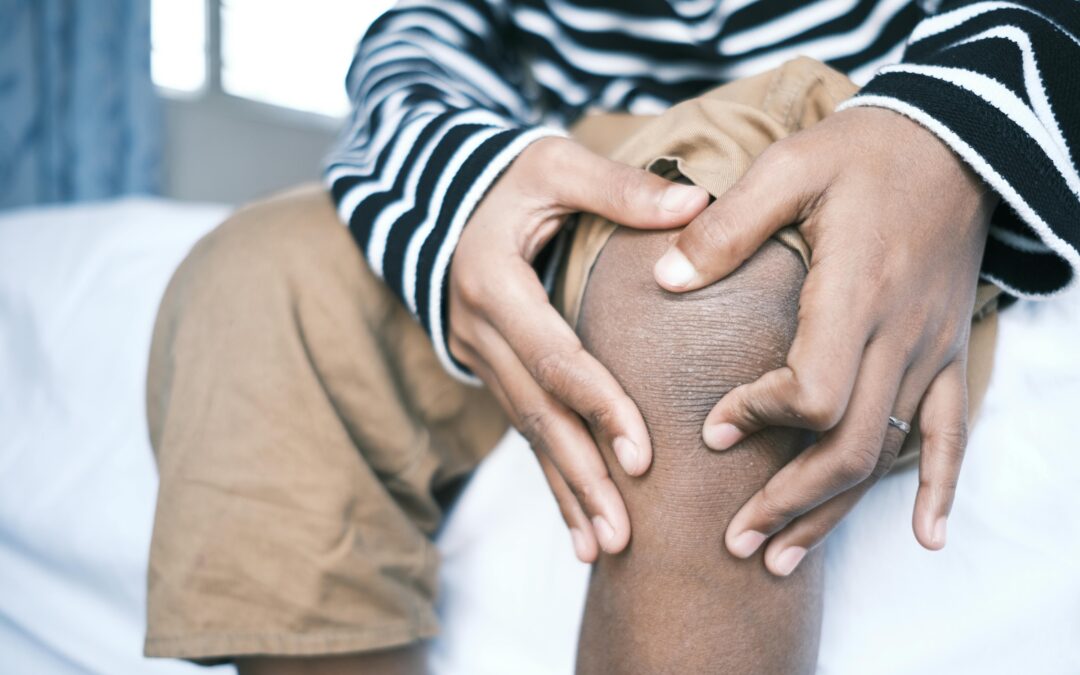
Knee pain is very common. Many different things can cause it. It could be a short-term injury or a long-term condition like arthritis. You can often treat knee pain at home by resting and taking over-the-counter medicine. If you had an injury or have knee pain for more than a few days, you should see a healthcare provider.
Knee pain is discomfort that you feel in or around your knee joint.
Joints are places in your body where two bones meet.
Your knee connects your thigh to your lower leg. It’s where your thigh bone meets your shin bone.
The knee is the largest joint in your body.
It helps to support your weight and absorb the force as you move. That’s why it’s one of the most commonly injured joints. Knee pain can be a short-term problem or a long-term condition.
Knee pain can come and go.
For example, you might feel pain when you move or bend your knee, but it might go away when you rest. Some people feel more pain at certain times of the day. You might feel more pain in the morning when you wake up. It’s also common to feel pain in your knee at night, especially if you were active earlier that day. Also read knee pain treatment singapore for more information.
You can often take care of knee pain at home by using over-the-counter pain relievers and by taking a break from physical activities.
Possible Causes
What Causes Knee Pain?
The most common causes of knee pain include:
Arthritis: Knee arthritis is very common.
Several types can cause knee pain, with osteoarthritis being the most common.
Injuries: Any injury that damages your knee joint can cause pain.
Sprains, hyperextensions, and meniscus tears can all lead to knee pain.
Overuse: Your knees may hurt if you work on your hands and knees or run and jump a lot.
Doing the same movement too often can cause repetitive strain and knee pain.
Lots of issues can cause knee pain.
It can be hard to tell what’s causing it on your own. Where your knee hurts can give clues about the cause.
Knee Pain Location Chart
Look at the chart.
It shows some examples of conditions and injuries that cause knee pain and where you’re more likely to feel it. You might feel pain:
In the front of your knee: Common causes include arthritis, bursitis, or patellofemoral pain syndrome.
Behind your knee: Tendon and ligament injuries, arthritis, Baker’s cysts, or overly tight leg muscles can cause pain here.
On the inside edge of your knee: MCL tears can cause pain on the inside edge.
It may also be a common issue like arthritis.
On the outside edge of your knee: LCL tears, arthritis, and meniscus injuries may all cause this kind of pain.
Iliotibial band syndrome can also cause sharp pain on the outside of your knees.
Your knees are a complex joint.
Everyone’s body is different. You might have a different injury or condition from the examples here. Seeing a healthcare provider is the only way to know for sure. Use this chart as a guide when you visit a provider. The more specific you can be, the better. Tell your provider:
Where your knee hurts
When you started feeling pain
What the pain feels like (sharp, stabbing, aching, dull, etc.)
If any movements or activities make the pain better or worse
If you have any other symptoms like swelling, bruising, or trouble moving
If you hear or feel a click or pop