
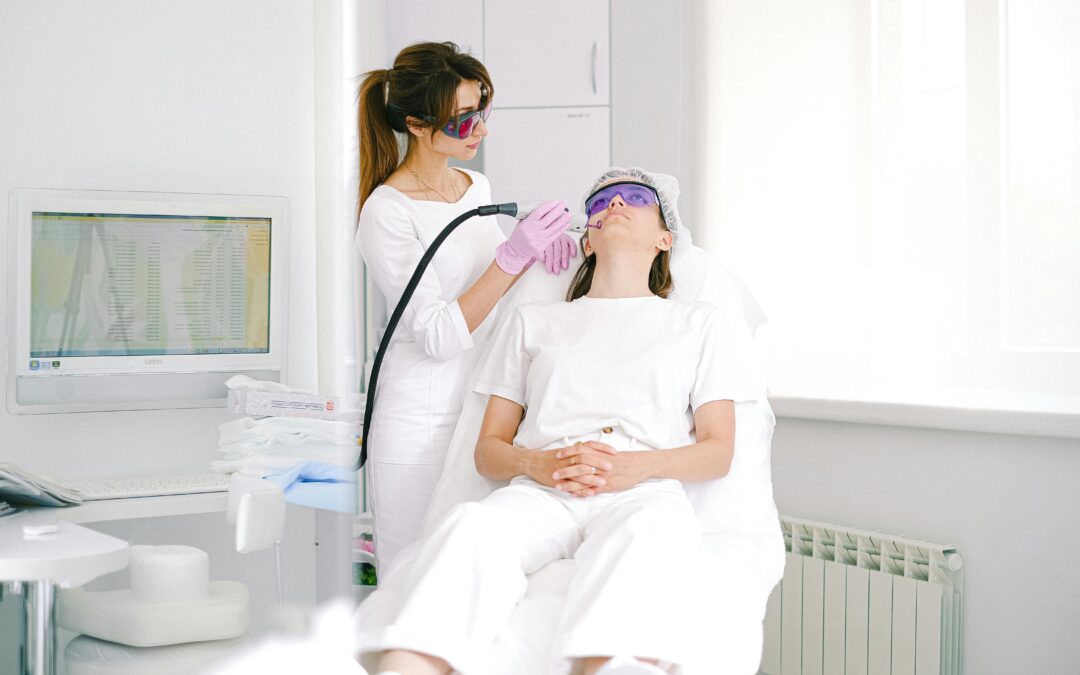
Lasers offer greater accuracy compared to standard surgical tools, allowing for cuts that are both shorter and less deep. This reduces tissue damage.
Procedures involving lasers typically take less time than conventional surgeries. Many times, they can be performed in an outpatient setting. There is no need to stay overnight in a hospital. In cases where general anesthesia is necessary, it is generally administered for a shorter duration.
Patients often experience quicker healing with laser procedures. You might encounter less discomfort, swelling, and scarring compared to traditional surgical methods.
What Can You Expect After Laser Treatment?
The recovery process following laser surgery resembles that of standard surgery. You might need to take it easy for a few days post-surgery and can use over-the-counter pain relievers until the pain and swelling subside.
The recovery duration after laser treatment can differ depending on the type of treatment received and the extent of the area affected.
It is essential to adhere to your doctor’s instructions closely. For instance, following laser prostate surgery, you may have to use a urinary catheter to assist with urination immediately after the procedure. Also read Laser Clinic in Singapore for more information.
If your treatment was on the skin, you may notice swelling, itchiness, and tenderness nearby the treated region. Your physician might apply an ointment and cover the area to keep it sealed and protected from moisture.
During the initial weeks after your treatment, ensure you:
Take over-the-counter pain relievers, such as ibuprofen or acetaminophen.
Regularly rinse the area with water for cleanliness.
Use ointments like petroleum jelly.
Apply ice packs as needed.
Refrain from removing scabs.
Once the site has healed and new skin has developed, if desired, you can apply makeup or cosmetic products to mask any visible redness.