
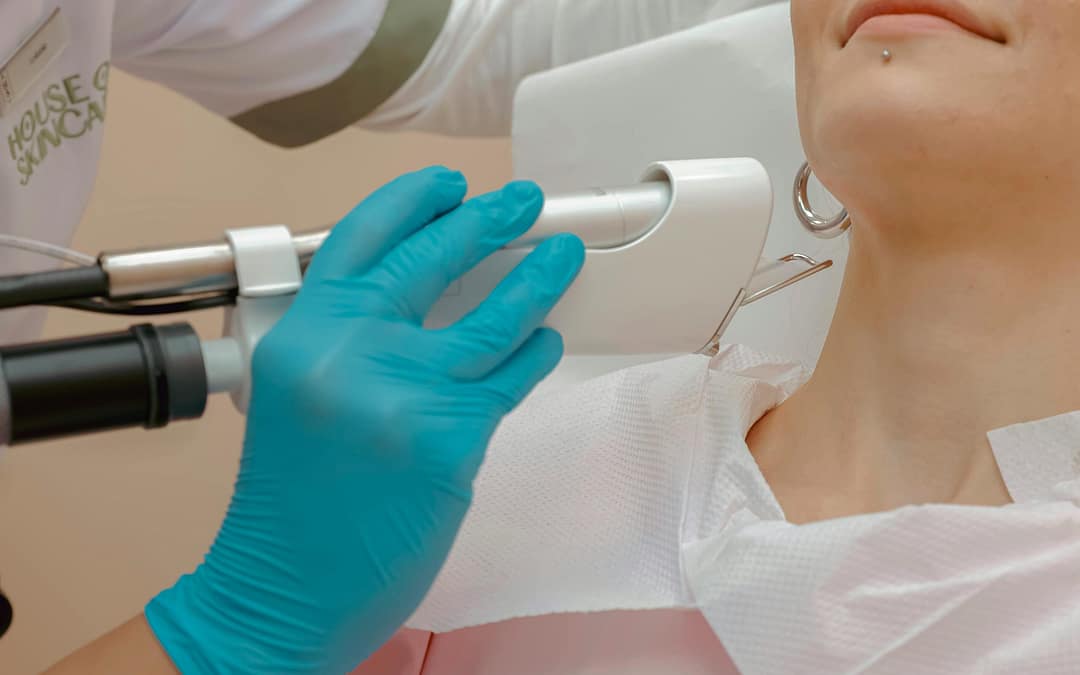
Picosecond Laser, commonly known as Pico Laser, is an advanced, ultra-short-pulse laser tool predominantly utilized to address pigmentation concerns. Prior to the development of the Pico Laser during the late 1990s, laser techniques for managing pigmentation, including tattoo removal, relied on argon and CO2 laser systems. As pointed out in an earlier piece on laser therapies, these devices are classified as “ablative,” indicating that they impact not just the pigment but also the surrounding skin cells, which can lead to significant side effects.
The emergence of a technique known as “selective photothermolysis,” referenced in a previous article, has permitted the targeted elimination of pigments while reducing unintended damage to the skin. This is achieved by employing a pulsed laser set at a specific wavelength that focuses directly on the pigmentation. This led to the development of Q-switched nanosecond laser systems, which emit a laser pulse that lasts for 10 nanoseconds.
In contrast, the Pico Laser operates under the principle of photoacoustic effects, using lasers to fragment pigments into minuscule particles. Utilizing a graphite laser with a wavelength of 1,064 nanometers, Pico Laser devices further minimize the laser pulse duration to between 10 and 100 picoseconds. Such brief laser pulses enable the breakdown of pigments into smaller pieces, aiding the body in naturally eliminating them while significantly decreasing thermal damage compared to other laser types. Consequently, Pico Laser has emerged as a preferred option for treating pigmentation disorders and for removing tattoos.
What Benefits Does Pico Laser Offer?
The main function of Pico Laser lies in addressing pigmentation disorders like melasma, nevus of Ota, nevus of Ito, pigmentation resulting from minocycline, and solar lentigines. Tattoo removal stands out as an additional capability of the Pico Laser, as it excels in handling blue and green inks and proves effective for tattoos that standard Q-switched lasers struggle to remove. Also read Pico Laser in Singapore for more information.
Additionally, the recent uses of Pico Laser now extend to skin resurfacing. When combined with fractional handpieces that promote tissue remodeling, similar to those used in fractional laser systems, Pico Laser devices are commonly employed to treat photoaging (including melasma), facial wrinkles, enlarged pores, atrophic acne scars, and stretch marks. Furthermore, Pico Laser effectively promotes skin rejuvenation by stimulating collagen production.
Moreover, Pico Laser is often integrated into multifaceted treatment approaches, serving as a preparatory step prior to administering Botox, fillers, and lipolysis; in tandem with 4% hydroquinone for addressing benign pigmented lesions; and alongside hyaluronic acid fillers for treating acne scars.
If you’ve been reading and are looking for solutions regarding pigmentation issues, tattoo removal, or skin rejuvenation, feel free to reach out to us for further consultation.